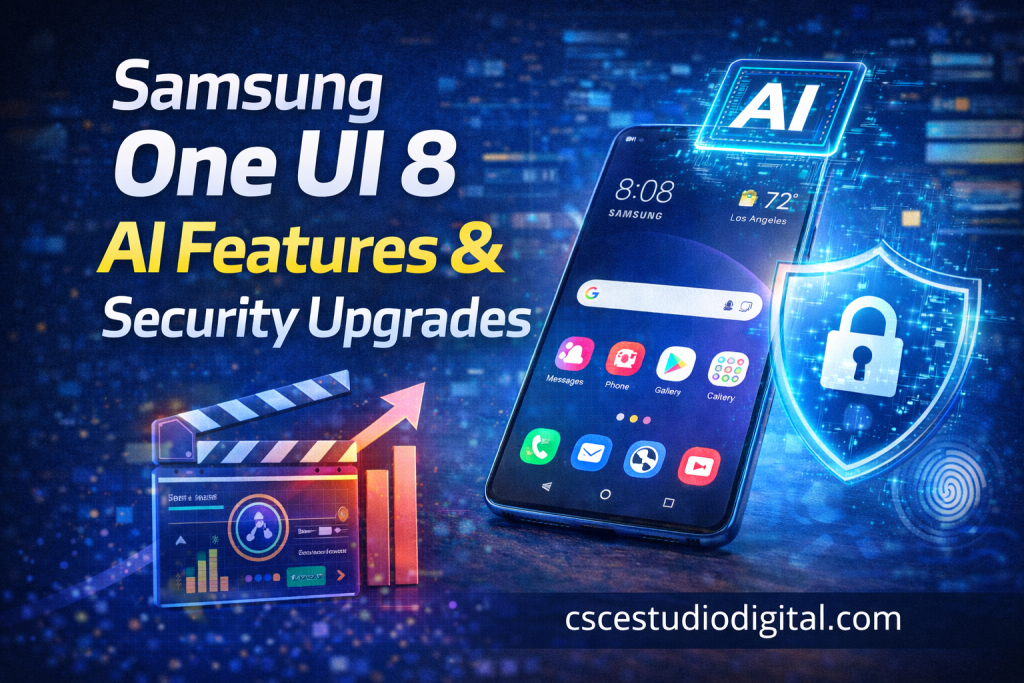
Samsung One UI 8 – AI Features & Security Upgrades
Samsung One UI has evolved far beyond a simple Android skin. With One UI 8, Samsung is signaling a clear direction for the future: deeply integrated artificial intelligence paired with stronger, more transparent security. This update is not just about visual polish or incremental improvements. It represents a shift toward smarter devices that understand user behavior while giving users more control over their data.
As AI becomes central to smartphones, Samsung is positioning One UI 8 as a platform where intelligence, personalization, and privacy coexist rather than compete.
What Makes One UI 8 a Major Step Forward
One UI 8 builds on Samsung’s previous AI efforts, but this version feels more intentional. Instead of adding isolated smart features, Samsung is weaving AI across the entire user experience. From how you interact with notifications to how your device manages battery life, AI is working quietly in the background.
At the same time, Samsung is responding to growing concerns about data privacy. One UI 8 introduces meaningful security upgrades designed to give users clarity and control, not just technical protection.
AI-Powered Personalization at the Core
One of the most noticeable changes in One UI 8 is how the interface adapts to individual usage patterns. AI-driven personalization is no longer limited to suggestions or widgets. It now influences system-wide behavior.
The interface learns how and when you use specific apps, adjusting layouts, recommendations, and system resources accordingly. For example, frequently used apps surface faster, while rarely used ones consume fewer background resources.
This personalization feels subtle rather than intrusive. The goal is to reduce friction, not overwhelm users with constant suggestions.

Smarter Notifications and Context Awareness
Notifications are one of the most common sources of digital fatigue. One UI 8 uses AI to prioritize notifications based on relevance, timing, and context.
Instead of simply grouping notifications, the system understands patterns. Work-related alerts are emphasized during business hours, while personal or social notifications are deprioritized when focus is needed. This context awareness helps users stay informed without feeling overwhelmed.
Over time, the system adapts without requiring manual rules or settings adjustments.
Samsung One UI 8: AI-Assisted Productivity Tools
Samsung continues to push productivity features, especially for Galaxy devices used in professional settings. One UI 8 enhances AI-assisted tools across multitasking, note-taking, and content creation.
Features include:
- Smarter text summarization in Samsung Notes
- AI-powered suggestions in Samsung Keyboard
- Contextual clipboard management
- Enhanced split-screen and window recommendations
These tools aim to save time rather than replace user input. AI assists with organization and structure while leaving creative control in human hands.
On-Device AI Processing for Better Privacy
A key shift in One UI 8 is Samsung’s increased emphasis on on-device AI processing. Instead of sending data to the cloud for every task, many AI features now run directly on the device.
This approach offers two major benefits:
- Faster response times
- Improved data privacy
Tasks like text analysis, image recognition, and usage prediction are handled locally whenever possible. This reduces reliance on external servers and minimizes data exposure.
Samsung One UI 8: Enhanced Camera Intelligence
Samsung’s camera software continues to benefit from AI improvements. One UI 8 introduces more intelligent scene detection, real-time optimization, and adaptive post-processing.
AI now understands not just what you are photographing, but how you prefer your photos to look. Over time, the camera adjusts color balance, contrast, and sharpening based on user preferences.
Video recording also benefits from improved stabilization and noise reduction driven by machine learning models optimized for Samsung hardware.
Battery and Performance Optimization Through AI
Battery life remains a top priority for users, and One UI 8 leverages AI to improve efficiency without sacrificing performance.
The system analyzes daily usage patterns to predict when high performance is needed and when power-saving measures can be applied. Background processes are managed dynamically, reducing unnecessary drain.
This results in smoother performance during active use and longer standby times without requiring manual intervention.
One UI 8 Security: A Major Focus
Security is where One UI 8 makes some of its most important upgrades. As AI becomes more integrated into personal devices, Samsung is addressing the risks that come with increased data processing.
Samsung Knox remains the foundation, but One UI 8 builds on it with new layers of transparency and control.
Advanced Permission Management
One UI 8 introduces more granular permission controls. Instead of simple allow-or-deny options, users can now define context-based permissions.
For example, an app may only access location data while actively in use, or only during specific times. AI helps identify apps that behave unusually and flags them for review.
This proactive approach helps users stay informed without needing deep technical knowledge.
Samsung One UI 8: AI-Driven Threat Detection
Security in One UI 8 is not reactive. AI models continuously monitor system behavior to detect anomalies that may indicate malicious activity.
This includes:
- Unusual app behavior
- Unauthorized background access
- Suspicious network activity
When potential threats are detected, users receive clear explanations rather than vague warnings. The goal is education as much as protection.
Improved Secure Folder and Data Isolation
Secure Folder has been enhanced with stronger isolation and smarter access controls. AI helps manage which apps and files belong in secure environments based on sensitivity.
Biometric authentication options are more flexible, and secure data remains isolated even during system-level operations like updates or backups.
Privacy Dashboard Enhancements
Transparency is a major theme in One UI 8. The Privacy Dashboard has been redesigned to provide clearer insights into how data is used.
Users can see:
- Which apps accessed sensitive data
- How often permissions were used
- Patterns that may indicate misuse
AI highlights unusual trends and offers recommendations, empowering users to make informed decisions.
AI and Security Working Together, Not Against Each Other
One of the most important aspects of One UI 8 is the way artificial intelligence and security are designed to operate together rather than in conflict. In many discussions about AI, privacy concerns dominate the conversation. Samsung’s approach attempts to address those concerns by building protective mechanisms directly into the AI framework itself.
Instead of relying entirely on cloud-based intelligence, many AI processes in One UI 8 run directly on the device. This on-device processing reduces the need to send sensitive information to external servers, which significantly lowers the risk of data exposure. Tasks such as text suggestions, contextual recommendations, and certain personalization features can be handled locally without leaving the phone.
Another key element is intelligent permission management. Apps that request access to sensitive features such as the microphone, camera, location, or contacts are monitored more closely. One UI 8 provides clearer explanations of why an app needs specific permissions and allows users to grant temporary or conditional access rather than permanent authorization.
Transparency is also improved through more detailed privacy reporting. Users can now see which apps accessed certain sensors or data and when that activity occurred. This level of visibility gives people greater confidence that their information is being handled responsibly.
Together, these systems create a more balanced ecosystem. AI is not treated as a separate layer of functionality but as a technology that must operate within strict privacy and security boundaries. The goal is to deliver smarter features without compromising trust.
How One UI 8 Compares to Previous Versions
When compared to earlier releases, One UI 8 represents a more mature and refined evolution of Samsung’s interface. Previous versions often introduced experimental AI features or design changes that felt like early-stage ideas. In contrast, One UI 8 focuses on improving the reliability and usefulness of features that people actually use every day.
Artificial intelligence in earlier versions sometimes felt like an add-on, providing suggestions that were inconsistent or easy to ignore. In One UI 8, AI functions are better integrated into everyday tasks. Recommendations are more context-aware, voice assistance is faster, and predictive tools feel more aligned with user behavior.
Security tools have also become far more accessible. In older versions, many advanced privacy controls were hidden deep within system settings. Now they are easier to locate and understand, making them useful for regular users rather than only tech enthusiasts.
Another area of improvement is performance stability. Animations are smoother, background processes are better optimized, and system resource management is more efficient. This results in faster app switching, improved responsiveness, and reduced battery drain during everyday use.
Rather than trying to impress users with flashy or experimental additions, Samsung appears to be focusing on something more important: refining the overall experience. The emphasis is now on reliability, trust, and long-term usability rather than novelty.
Who Benefits Most from One UI 8
The design philosophy behind One UI 8 is centered on broad usability. Instead of targeting a single type of user, the update introduces improvements that benefit multiple groups in different ways.
Professionals and productivity-focused users gain stronger security controls and more efficient multitasking features. Improved file handling, smarter notifications, and better device management tools make it easier to work on a phone without constant interruptions.
Content creators also benefit from several improvements. Camera software enhancements, AI-assisted editing tools, and better media organization make it easier to capture, edit, and share content quickly. For people who rely on their phones for photography, video creation, or social media publishing, these upgrades can significantly streamline the workflow.
Everyday users may notice the most practical improvements in performance and battery optimization. One UI 8 is designed to manage background apps more intelligently, reducing unnecessary power consumption while maintaining smooth system performance.
Privacy-conscious users also gain meaningful advantages. With clearer privacy dashboards, improved permission controls, and more transparent system reporting, individuals who care about data protection have greater visibility and control over how their information is used.
Because of this wide range of benefits, One UI 8 stands out as one of Samsung’s most balanced software updates in recent years. It is not built solely for power users or casual consumers, but rather for the entire smartphone ecosystem.
The Bigger Picture: Samsung’s AI Strategy
The release of One UI 8 reflects a much larger technological strategy being pursued by Samsung Electronics. The company is increasingly positioning artificial intelligence as a core component of its entire product ecosystem rather than a feature limited to smartphones.
Samsung has been expanding AI capabilities across tablets, smartwatches, laptops, and smart home devices. This broader ecosystem approach allows devices to share information, automate tasks, and create a more connected user experience.
For example, AI-powered automation can coordinate actions between multiple devices. A smartphone might trigger smart home adjustments, manage notifications across devices, or synchronize productivity tools between a tablet and a wearable device.
Another major focus of Samsung’s strategy is on-device intelligence. While many technology companies rely heavily on cloud-based AI processing, Samsung is investing heavily in local processing capabilities. This approach offers two important advantages: faster performance and stronger privacy protection.
Security-first design is also a central part of this vision. As AI becomes more deeply integrated into everyday technology, protecting user data becomes increasingly important. Samsung is therefore emphasizing encryption, secure processing environments, and advanced privacy controls as foundational elements of its AI ecosystem.
In the long term, One UI 8 can be seen as a step toward a more intelligent and interconnected technology environment. Rather than simply adding AI features to smartphones, Samsung is building an ecosystem where devices learn from user behavior, adapt to changing needs, and operate together seamlessly.
As AI continues to evolve, this ecosystem-driven approach may become one of the defining factors that separates leading technology platforms from the rest of the market.
Conclusion: A Smarter and Safer Galaxy Experience
Samsung One UI 8 is not about dramatic visual changes or flashy gimmicks. It is about meaningful improvements that enhance daily use while respecting user privacy.
By embedding AI thoughtfully and strengthening security at every level, Samsung is delivering an interface that feels intelligent without being invasive.
As smartphones become more powerful and more personal, One UI 8 shows that innovation and trust do not have to be mutually exclusive. It represents a confident step forward in the evolution of mobile software.

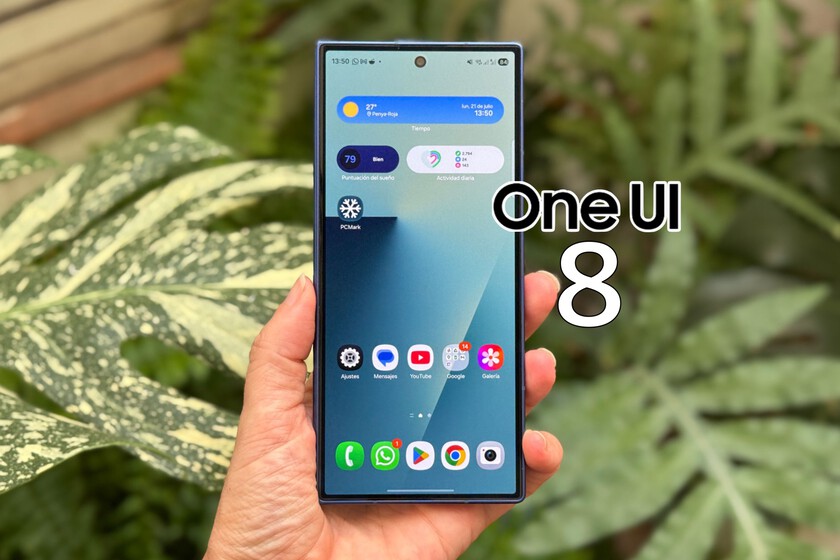
Samsung One UI 8
Samsung One UI 8 latest update, One UI 8, starts rolling out now for Galaxy S25 and will expand to other devices soon. It’s packed with AI-powered upgrades: multimodal recognition (visual, voice, text), real-time translation, AI-assisted writing and drawing, and even some playful additions like pet portrait generation.
Samsung One UI 8: On the security front, the update includes:
- Knox Enhanced Encrypted Protection (KEEP) for saving apps/data with stronger encryption
- Knox Matrix, which auto-logs out if suspicious activity is detected
- Secure Wi-Fi that uses post-quantum cryptography
Why this matters for creators and digital business:
- With real-time tools built into devices, on-device video editing and AI effects will become more powerful and accessible
- Security becomes a selling point; users are more aware of privacy and expect protection in every software update
- Creators should adapt: content that shows how to use these new AI features (drawing, translation, generation) will attract interest