
Why AI Video Channels Beat Freelancing Every Time
For more than a decade, freelancing was positioned as the ultimate escape plan. Designers left agencies. Editors quit studios. Writers walked away from traditional jobs. The promise was simple: sell your skills directly, control your schedule, keep the profit.
And for a while, it worked.
Freelancing gave people autonomy. It removed middlemen. It allowed talented individuals to monetize their abilities quickly. In many cases, it was far better than traditional employment.
But the landscape has changed.
In 2026, a different model has quietly outperformed freelancing in nearly every meaningful category. AI video channels are not just another side hustle. They represent a structural shift from selling labor to building leverage.
When you compare both models side by side, the differences become obvious. Freelancing scales slowly because it depends on personal output. AI video channels scale through systems. Freelancing income rises only when hours increase. AI channels can grow while you sleep. Freelancers are paid per task. Channel owners are paid per asset performance.
Time freedom also looks very different in practice. Freelancers often believe they control their schedule, but client deadlines, revisions, and communication demands create constant pressure. Channel builders, once their workflow is structured, operate on production cycles they control.
Growth speed is another separating factor. A freelancer can raise rates, but only within market limits. A channel, however, can multiply revenue streams: ads, affiliates, sponsorships, digital products, partnerships, licensing. One audience can produce multiple income channels simultaneously.
Long-term stability is where the gap becomes undeniable. Freelancers rely on continuous client acquisition. If outreach slows down, income drops. AI video channels, when built strategically, become compounding digital properties. Views accumulate. Subscribers grow. Content continues generating revenue long after publication.
Most freelancers are still exchanging time for money. AI channel builders are constructing assets that operate 24/7.
This is not about dismissing freelancing. It is about understanding leverage. One model depends on effort. The other depends on systems.
The Fundamental Problem With Freelancing
Freelancing looks clean and simple at first glance. You offer a service. You attract clients. You deliver work. You get paid.
The cycle feels empowering in the beginning. But over time, its structural limitations become impossible to ignore.
Freelancers must continuously secure new clients to maintain income. Even long-term contracts eventually end. Marketing yourself never stops. Negotiation never stops. Prospecting never stops.
More importantly, income is directly tied to availability. If you stop working, revenue stops. Vacations reduce earnings. Illness reduces earnings. Burnout reduces earnings. There is no separation between production and pay.
Growth becomes physically constrained. There are only so many hours available each week. Raising rates helps, but markets resist aggressively high pricing unless reputation is exceptional. Hiring subcontractors introduces management complexity, which transforms the freelancer into a small agency operator — often with new stress levels.
Stress itself becomes part of the model. Deadlines, revisions, scope creep, late payments, and client expectations create constant pressure. Even highly successful freelancers often reach a plateau where income is decent but scalability feels capped.
That ceiling is built into the structure.
There are only twenty-four hours in a day.
AI video channels do not share that limitation.
How AI Video Channels Work Differently
An AI video channel operates on a completely different foundation. Instead of selling tasks, you build a repeatable system that produces content at scale.
At its core, the channel becomes a content engine. Once your niche, workflow, and publishing rhythm are defined, the system begins generating outputs consistently. Those outputs attract views. Views generate traffic. Traffic creates monetization opportunities. Revenue compounds over time.
The key shift is this: effort is front-loaded into building the system rather than repeatedly delivering services.
Modern AI tools, including platforms like Google Veo 3, allow creators to generate high-quality video content without traditional filming, editing timelines, or large production teams. This dramatically reduces production friction. What once required technical mastery and hours of editing can now be structured into efficient workflows.
The result is leverage.
Instead of being paid once per project, each video becomes a small asset that can generate returns repeatedly. Over time, dozens or hundreds of these assets accumulate inside a single channel. Performance becomes portfolio-based rather than project-based.
You are no longer functioning as a contractor completing assignments. You are building owned media infrastructure.
Freelancing pays you for effort.
AI channels pay you for ownership.
That difference changes everything.

Income Scalability: The Biggest Difference
If you strip away opinions and compare the two models structurally, income scalability is where the separation becomes undeniable.
Freelancing Income Reality
A freelancer’s earnings are directly tied to capacity. Revenue depends on how many clients can be managed at once, how many hours can be worked each week, how much physical and mental energy is available, and how high prices can reasonably be pushed before resistance appears.
At the beginning, growth feels exciting. A few new clients can double income quickly. Raising rates brings noticeable improvements. But eventually a ceiling appears.
To earn more, a freelancer must work longer hours, take on more complex projects, hire subcontractors, or transition into managing a small team. Each step increases operational stress. More clients mean more communication. More revenue means more responsibility. Growth becomes heavier instead of lighter.
The structure itself creates friction. Scaling requires proportional effort.
AI Video Channel Income Reality
AI video channels scale differently because they are not constrained by personal availability. Once a system is built, publishing more content does not require a linear increase in effort.
You can expand output without expanding hours. You can reach audiences globally instead of locally. You can monetize viewers across time zones while you sleep. Most importantly, old content continues working long after it is published.
One strong video can generate revenue for months or even years. A collection of videos becomes a compounding library. Over time, that library turns into a 24-hour revenue engine.
Freelancing produces income per project. AI channels produce income per asset. That distinction changes the growth curve entirely.
Time Freedom Versus Client Dependence
Freelancing is built around client relationships. Every project introduces communication cycles, revisions, feedback loops, and deadlines. Even when compensation is strong, control is shared. Clients dictate timelines. They request changes. They influence workload intensity.
This creates a subtle but constant dependency.
AI video channels operate differently. They do not rely on individual clients. They rely on systems and platforms. Once content is created and optimized, distribution and monetization happen automatically.
There are no revision emails. No negotiation calls. No urgent “can you fix this today?” messages.
True time freedom is not about working fewer hours. It is about removing income dependence on specific individuals. AI channels reduce that dependence significantly.
Why AI Tools Destroy the Freelance Advantage
Freelancers historically held an advantage because specialized creative skills were scarce. Video editing, animation, scriptwriting, and production workflows required years of practice and expensive tools.
AI has reduced that barrier dramatically.
With platforms like Google Veo 3 and other generative tools, high-quality video creation can happen in minutes instead of days. Production costs continue to decline. Output quality continues to improve. Technical complexity continues to decrease.
This automation erodes the scarcity that once protected freelance pricing power.
Freelancers compete in a market where their core skills are becoming increasingly automated. AI channel builders, however, benefit from that same automation. The tools reduce their production costs and increase their output capacity.
The trend favors owners of systems, not sellers of manual tasks.
Asset Building Versus Gig Chasing
Ownership is one of the most overlooked differences between these models.
Freelancers primarily own their labor. When they stop working, income stops. Each new project must be secured individually. There is no compounding asset unless they transition into building a brand or agency.
AI video channels, by contrast, accumulate value over time. They gather subscribers, build watch history, develop search presence, strengthen niche authority, and attract consistent traffic. These elements create equity.
A mature channel can be sold as a digital property. Buyers evaluate its revenue history, audience loyalty, and growth potential. That is asset valuation.
A freelance profile, even a strong one, rarely holds transferable long-term value in the same way.
One model rents time. The other builds property.
Automation: The Ultimate Advantage
Freelancing cannot be fully automated. Even with templates and productivity tools, human labor remains central. Every deliverable requires direct involvement.
AI video channels, however, can be systemized extensively.
Modern workflows can include automated idea generation, AI-assisted scriptwriting, video creation using tools like Google Veo 3, synthetic voiceover production, caption generation, thumbnail design, and scheduled publishing.
Once structured properly, this system operates with minimal ongoing effort. Refinement replaces heavy labor. Optimization replaces constant execution.
Freelancing scales through effort. AI channels scale through automation.
Income Sources: Single Stream Versus Multiple Streams
Freelancers typically rely on client payments as their primary revenue source. Even if they serve multiple clients, the income structure is fundamentally the same: deliver service, receive payment.
AI video channels can generate revenue from multiple directions simultaneously.
Advertising revenue provides baseline income based on views and engagement. Affiliate marketing allows creators to promote tools, software, training programs, and digital products aligned with their niche. Channels can collect email leads to build long-term audiences. Sponsorship opportunities increase as subscriber counts grow. Product sales, such as courses or services, add another layer of monetization.
These income streams operate in parallel.
Diversification creates stability. If one stream fluctuates, others continue producing. Freelancing rarely offers that kind of built-in diversification.
Stress Levels: High Versus Low
Freelancing often carries emotional weight. Managing client expectations, handling payment delays, navigating competitive marketplaces, and meeting tight deadlines create ongoing pressure.
The stress is interpersonal and operational.
AI video channels shift the focus. The primary responsibilities become improving content quality, refining systems, analyzing performance data, and publishing consistently.
There are no difficult client conversations. No contract disputes. No urgent revision demands.
The stress that remains is strategic, not relational.
Growth Speed Comparison
Growth in freelancing typically requires structural changes. To double income, a freelancer must increase rates, add clients, extend working hours, or hire assistants. Each path introduces new complexity and management overhead.
Growth becomes heavier as revenue rises.
AI channel growth follows a different pattern. Increasing income can involve publishing more optimized videos, improving audience retention, expanding to additional platforms, or enhancing monetization strategies.
The system improves. The workload does not necessarily double.
This difference between effort-based growth and system-based growth is significant.
Starting Costs: Another Big Advantage
Freelancing often requires upfront investment. Professional software subscriptions, hardware upgrades, paid advertising, and time-consuming portfolio development can create early financial pressure.
AI video channels, by comparison, have minimal entry requirements. A stable internet connection, access to AI tools such as Google Veo 3, consistent execution, and a clearly defined niche are often enough to begin.
Lower starting costs reduce risk and accelerate experimentation.
Why Small Businesses Are Leaving Freelancers
Market behavior is shifting as well.
Small businesses previously relied heavily on freelancers for video production. Today, many are adopting AI-driven solutions because they are more affordable, faster to produce, easier to scale, and more consistent.
This shift does not eliminate freelancers entirely, but it reduces demand for routine, repeatable tasks. At the same time, it increases demand for scalable AI-driven content systems.
The market is signaling a preference for automation.
Those who build assets aligned with that preference benefit. Those who rely solely on manual service delivery face increasing pressure.
The direction is clear. The advantage belongs to leverage.
How to Transition From Freelancing to AI Channels
If you are currently freelancing, the transition to AI video channels is not a radical leap. In many cases, you already possess the core skills: content understanding, market awareness, and execution discipline. The difference lies in redirecting those abilities from client work toward asset building.
The first step is choosing a niche. Instead of creating content for anyone willing to pay, you define a focused topic with monetization potential. Areas such as making money online, personal finance, health, business education, or AI-related training tend to perform well because they combine audience demand with strong revenue pathways. The key is not just popularity, but alignment between content and monetization opportunities.
Once your niche is defined, the next phase is building a simple, repeatable system. This does not require complexity. It requires structure. Tools like Google Veo 3 can handle video generation. AI writing platforms can assist with scripting. Voiceover generators provide narration. Captioning software improves accessibility and retention. When these tools are combined into a streamlined workflow, production becomes predictable instead of overwhelming.
Consistency then becomes the growth engine. Publishing two to three videos per day — or whatever schedule you can sustain long term — compounds results over time. Cross-posting across platforms increases exposure and reduces dependence on a single algorithm. The goal is not random uploads, but structured repetition.
Monetization should not be delayed. From the beginning, content should include affiliate links, lead magnets, or clear pathways toward ad revenue eligibility. Waiting to “figure out monetization later” slows momentum. Align revenue strategy with content direction early.
Finally, scaling happens by improving the system rather than increasing personal workload. Optimize prompts. Refine scripts. Improve thumbnails. Expand to additional niches only after the first system is stable. Growth should feel structured, not chaotic.
The transition is less about abandoning freelancing overnight and more about reallocating energy from client tasks to asset creation.
Realistic Income Potential
Freelancers often reach an income plateau unless they transition into building an agency. Even successful solo freelancers typically cap out at a few thousand dollars per month unless they increase rates significantly or manage a team.
AI video channels operate under a different dynamic.
There is no fixed ceiling because revenue is not tied to hourly capacity. A single well-performing channel can generate advertising income, affiliate commissions, sponsorship deals, and product sales simultaneously. As the content library expands, revenue compounds.
Multiple channels can multiply that effect. Each channel becomes an independent asset contributing to total income. The upside is not guaranteed, but structurally it is far less constrained than a time-for-money model.
The earning potential depends on execution, niche selection, and consistency. But unlike freelancing, there is no hard limit created by available hours.
Common Objections From Freelancers
Many freelancers hesitate to pivot because of uncertainty. The concerns are predictable.
Some argue that AI-generated videos are not high enough quality. Others believe channels take too long to grow. Some feel freelancing is more reliable because it involves direct payments from clients.
These objections are understandable, but they often rely on outdated assumptions.
AI video quality improves continuously. What seemed unusable a year ago is now commercially viable. Growth timelines for channels are often shorter than the time required to build a high-paying freelance reputation. And while clients may appear reliable, they can disappear unexpectedly. Automation-based income, once established, is often more stable because it is diversified across audiences rather than dependent on a few individuals.
The hesitation usually comes from familiarity. Freelancing feels known. AI channels feel new. But markets reward adaptation, not comfort.
The Future Is Clear
Freelancing will not disappear entirely. High-end creative services, complex custom projects, and specialized consulting will always exist. There will always be a place for skilled professionals delivering premium work.
However, for the majority of online creators, AI video channels represent a more scalable and future-aligned path.
They offer greater freedom because income is not tied to client schedules. They offer scalability because content libraries compound over time. They offer stability because revenue can flow from multiple sources simultaneously. And they offer long-term upside because channels can grow in value as digital assets.
As AI tools continue improving, creators who build systems around them will benefit from automation rather than compete against it.
Final Thoughts
Freelancing was one of the best online business models of the past decade. It gave individuals independence and control at a time when digital platforms were expanding rapidly.
But the next decade favors leverage over labor.
One path keeps you exchanging hours for payments. The other path focuses on building assets that can generate income repeatedly without direct involvement each time.
If your objective is genuine online freedom, the strategic direction becomes clear. Shift from selling time to building systems. Use tools like Google Veo 3 and complementary AI platforms to create structured channels that grow incrementally every day.
Freelancing rewards effort.
AI video channels reward ownership.
That structural difference is why AI video channels consistently outperform traditional freelance models.
EXTRA: 7 AI Video Channels ideas you can create for 2026
AI News Explainers (60–120 seconds)
Short videos explaining trending news using AI visuals, stock + text-to-video.
Niche it down: tech, money, AI, geopolitics, or “news you actually need”.
Monetization: ads, sponsors, affiliate tools.
AI Motivational Stories (Shorts-first)
Narrated stories with AI visuals + voiceover.
Focus on discipline, money mindset, resilience, silence > hype.
Evergreen content = no burnout.
AI History “What If” Channel
Alternate history scenarios generated with AI visuals.
“What if Rome never fell?” “What if AI existed in 1900?”
High retention, insane curiosity clicks.
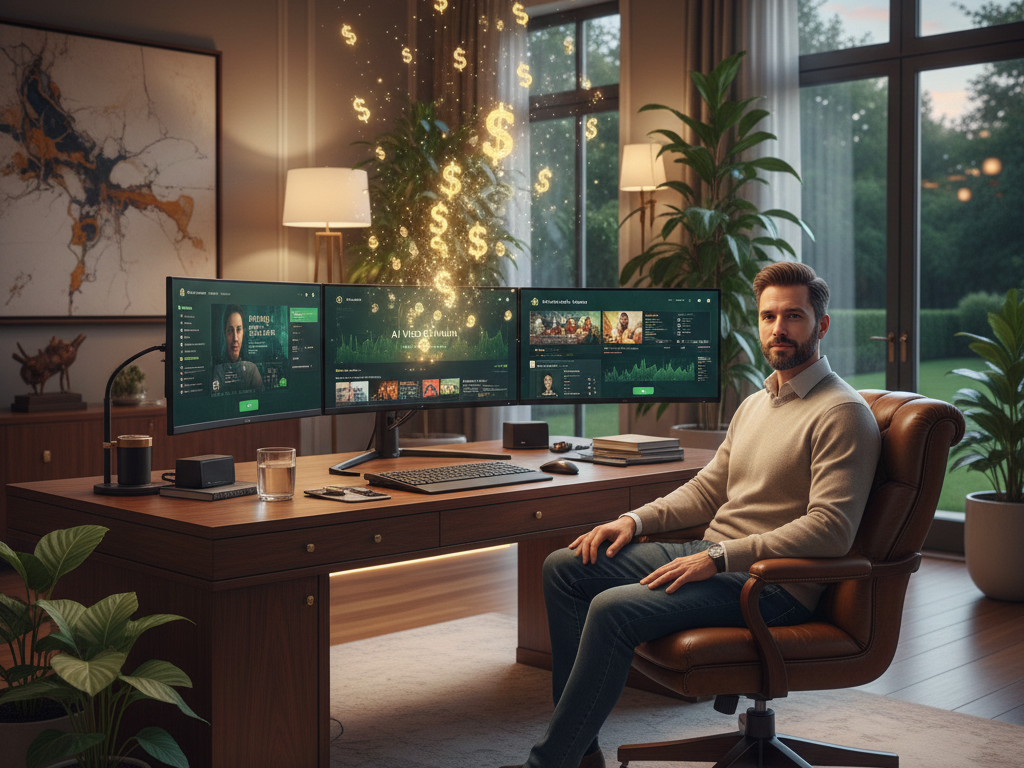
AI Luxury Lifestyle Visualization
AI-generated visuals of luxury homes, cars, travel, daily routines.
People don’t watch to learn, they watch to feel.
Monetization: affiliates, mindset products, brand deals.
AI Dark Psychology & Human Behavior
Explain manipulation, habits, persuasion, cognitive bias.
Minimal visuals, strong scripts, moody AI scenes.
High CPM niche if done smart (no cringe TikTok guru tone).
AI Kids Safe Stories Channel
Short animated stories using AI, 100% family-friendly.
Animals, morals, imagination.
Monetization: ads + books + licensing later.
(Here sí: cuidado absoluto con compliance y tono).
AI “One Minute Skills” Channel
Teach one practical skill per video using AI visuals.
Examples: money, communication, productivity, social skills.
Perfect for Shorts + long-form compilations.
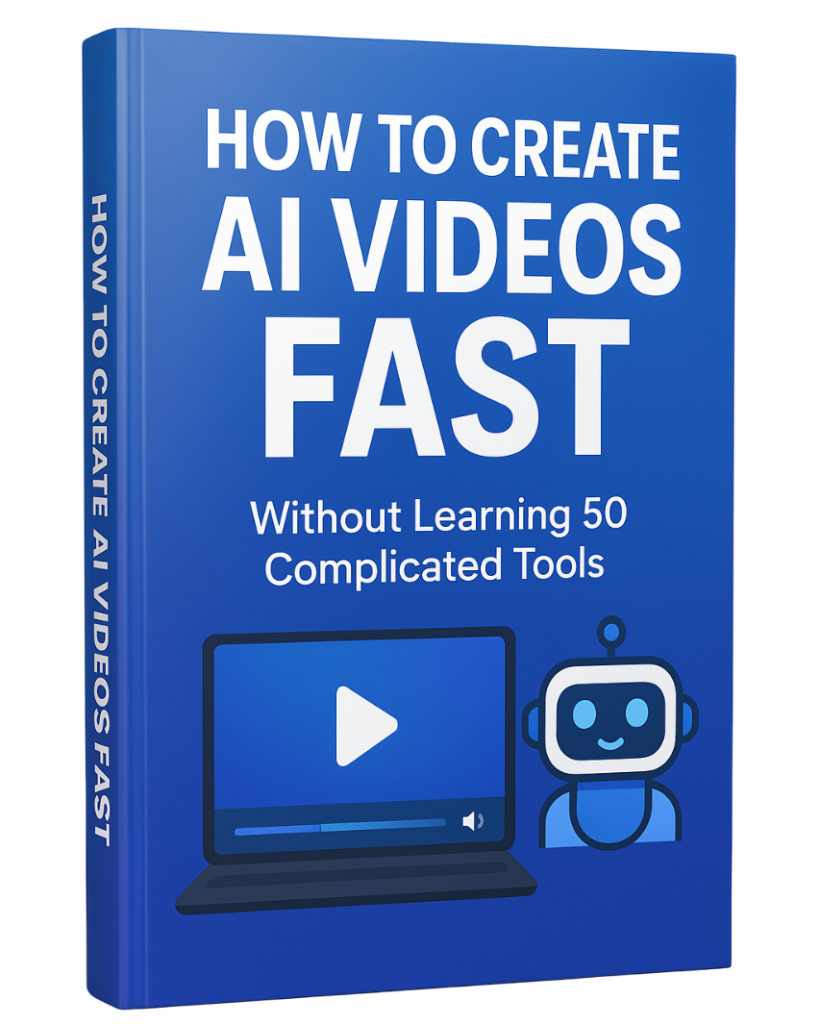
AI Video Channels creation
Learn How to Create AI Video Channels Fast an Easy,
If you want a step-by-step guide to create AI videos fast — without learning 50 complicated tools — download the free PDF below and simplify your entire workflow.
Download the free guide:
How to Create AI Videos FAST Without Learning 50 Complicated Tools