How to Use AI to Boost Sales Introduction
Sales are the lifeblood of any business. Whether you run an e-commerce store, a consultancy, or a creative agency, generating consistent revenue is what keeps your business alive. But the landscape of sales and marketing is changing rapidly, and artificial intelligence (AI) is at the center of this transformation.
The truth is, AI is no longer just for big corporations with huge budgets. In 2025, entrepreneurs, small businesses, and even freelancers can leverage AI-powered tools to attract more customers, personalize their offers, and close more deals.
In this article, we’ll break down how you can use AI to boost sales in your business today, with real-world strategies and the best tools available right now.
Why AI Is a Game-Changer for Sales
How to Use AI to Boost Sales: Artificial intelligence is redefining how modern sales systems operate. For decades, sales growth depended heavily on manual processes: cold outreach, static email campaigns, generalized offers, and reactive customer service. While these methods can still produce results, they lack precision and scalability. AI changes that dynamic completely. It transforms sales from a reactive activity into a predictive, data-driven engine capable of operating at a scale that would be impossible for human teams alone.
One of the most powerful shifts AI enables is personalization at scale. Traditionally, personalization required significant time and segmentation effort. Sales teams would group customers into broad categories and tailor messaging accordingly. AI eliminates those limitations by analyzing behavioral data, browsing patterns, purchase history, engagement signals, and demographic insights in real time. Instead of sending the same message to thousands of people, businesses can dynamically adapt offers, product recommendations, pricing incentives, and email content for each individual buyer. This level of relevance dramatically increases open rates, click-through rates, and conversion probabilities because customers feel understood rather than targeted generically.
AI also accelerates decision-making. Through predictive analytics, sales teams can identify patterns that signal buying intent before the opportunity becomes obvious. For example, if a prospect visits a pricing page multiple times, downloads a guide, and interacts with certain emails, AI systems can flag that lead as high-priority automatically. Instead of chasing cold prospects randomly, teams focus on high-intent buyers with stronger closing potential. This proactive insight shortens sales cycles and improves win rates because resources are allocated strategically rather than evenly across all leads.
Another transformational advantage is 24/7 engagement. In a global economy, customers expect immediate responses. AI chatbots and virtual assistants provide instant support, answer product questions, guide users through purchasing decisions, and resolve basic concerns without human delay. This continuous availability reduces friction in the buying process. When questions are answered instantly, hesitation decreases — and hesitation is often what prevents a sale. Around-the-clock engagement ensures that opportunities are not lost simply because a human representative was unavailable.
Finally, AI introduces operational efficiency at scale. Many sales activities are repetitive but necessary: lead scoring, follow-up scheduling, CRM updates, performance reporting, pipeline tracking. Automating these tasks frees sales professionals to focus on high-impact activities such as building relationships, negotiating deals, refining strategy, and improving messaging. Efficiency is not just about saving time; it is about reallocating energy toward revenue-generating conversations instead of administrative overhead.
In essence, AI is a game-changer for sales because it enhances precision, speed, availability, and productivity simultaneously. It does not replace human connection — it strengthens it by removing inefficiencies and empowering smarter, more informed interactions.

How to Use AI to Boost Sales in Your Business (2026 Guide)
Step 1: Use AI to Understand Your Customers
The first step to boosting sales with AI is understanding your audience deeply. Tools like HubSpot AI, Zoho CRM Plus, and Salesforce Einstein can track customer behavior, analyze purchase history, and predict what your audience is likely to buy next.
Practical Tips:
- Set up AI-powered CRM dashboards to track leads and customer journeys.
- Use AI to segment your audience based on buying behavior.
- Implement predictive analytics to spot sales opportunities early.
Step 2: AI-Powered Personalization in Marketing
Personalization is no longer optional—it’s expected. Customers want to feel like you know them, and AI makes this possible.
Examples of AI personalization tools:
- Dynamic product recommendations: Platforms like Shopify AI and Amazon Personalize suggest the right products to the right customers.
- Email marketing with AI: Tools like ActiveCampaign AI and Klaviyo AI generate subject lines, personalize content, and optimize send times.
- Website personalization: With AI-driven tools such as Optimizely, your site can adapt dynamically to each visitor.
Impact: Personalized marketing has been proven to increase conversion rates by up to 80%.
Step 3: Automate Lead Generation and Qualification
Leads are the foundation of sales. But not all leads are equal. This is where AI comes in—helping you focus on the most valuable prospects.
AI tools for lead generation:
- LinkedIn Sales Navigator + AI assistants to find and qualify leads.
- Apollo.io with AI scoring to prioritize the hottest prospects.
- ChatGPT-powered chatbots for conversational lead capture on websites.
Instead of spending hours chasing low-quality leads, AI ensures your sales team focuses on people most likely to buy.
Step 4: Enhance Customer Experience with AI Chatbots
AI chatbots are no longer clunky. In 2025, they provide human-like conversations that guide customers through the buying process.
Benefits:
- Answer FAQs instantly.
- Upsell or cross-sell during chats.
- Schedule meetings or calls for sales teams.
Recommended tools:
- Intercom AI, Drift, and Tidio AI offer advanced chatbot solutions tailored to businesses of all sizes.
A great customer experience increases retention, referrals, and lifetime value—all directly tied to sales growth.
Step 5: Optimize Pricing with AI
Pricing is a science, and AI can help you get it right. Instead of guessing, AI analyzes competitor prices, customer demand, and purchase history to suggest the best price point.
Tools like:
- Prisync for e-commerce dynamic pricing.
- Pricefx for enterprise-level solutions.
- Competera AI for real-time pricing strategies.
The right price at the right time can make a massive difference in sales conversion.
Step 6: Use AI to Supercharge Your Sales Team
AI doesn’t just automate tasks; it can coach your team too. AI-powered platforms can analyze calls, emails, and pitches, then suggest improvements.
Examples:
- Gong.io and Chorus AI provide insights into customer conversations, helping sales reps close deals faster.
- Crystal Knows uses AI to analyze customer personalities and suggest communication strategies.
How to Use AI to Boost Sales? Imagine having a digital sales coach that helps your team improve performance every single day.
Step 7: Predict Future Trends with AI Analytics
Finally, one of the most powerful uses of AI in sales is forecasting. AI tools can predict seasonal demand, market shifts, and customer behavior trends.
Best tools for predictive analytics:
- Tableau with AI integration.
- Microsoft Power BI with Copilot.
- Google Cloud AI for advanced forecasting.
By knowing what’s coming, you can adjust your sales strategy proactively instead of reacting too late.

How to Use AI to Boost Sales: Real-World Examples of AI Increasing Sales
Artificial intelligence is no longer a futuristic add-on reserved for tech giants. It has become a practical revenue engine — and the companies using it strategically are seeing measurable financial impact. The key is not simply “using AI,” but integrating it into decision-making, personalization, and customer experience in ways that directly influence buying behavior.
Take Coca-Cola as an example. The company leverages AI to analyze vast datasets that include weather patterns, regional purchasing trends, retail performance, and supply chain logistics. Instead of reacting to demand shifts after they happen, AI allows Coca-Cola to anticipate them. By predicting which products will sell more in specific regions and seasons, the company optimizes manufacturing schedules and distribution routes. The result is reduced waste, lower transportation costs, and better product availability in stores. That operational precision doesn’t just save money — it protects revenue by ensuring shelves are stocked with what customers actually want. Billions in cost efficiencies translate into stronger margins and competitive advantage.
Netflix offers a different, but equally powerful, example. Its AI-driven recommendation engine doesn’t just suggest random titles; it continuously analyzes viewing history, watch time, interaction patterns, and even pause or rewind behavior. This level of personalization keeps users engaged for longer periods and significantly reduces churn. When subscribers consistently find content they love, they stay. Retention is one of the most critical revenue metrics for subscription-based businesses, and Netflix’s AI personalization directly influences lifetime customer value. More engagement equals more renewals, and more renewals mean stable, predictable revenue growth.
Now shift the lens to small and medium-sized businesses. AI-powered chatbots have transformed customer service from a cost center into a sales opportunity. Instead of waiting hours for email replies or missing inquiries after business hours, customers receive instant responses 24/7. These bots can answer common questions, recommend products based on preferences, and even suggest complementary items during checkout. That immediate interaction increases trust, reduces friction in the buying process, and often boosts average order value through intelligent upselling. Additionally, faster response times improve customer satisfaction, which strengthens retention and repeat purchases.
Across these examples, the pattern is clear: AI increases sales by improving prediction, personalization, and responsiveness. Whether optimizing logistics, tailoring recommendations, or enhancing customer support, AI removes guesswork and replaces it with data-driven precision. Businesses that apply AI strategically are not just automating tasks — they are engineering smarter revenue systems.
How to Use AI to Boost Sales: Conclusion
Artificial intelligence is not here to replace sales professionals — it is here to amplify their impact. The most successful companies are not choosing between human talent and technology; they are combining both. AI handles the data-heavy, repetitive, and predictive tasks, while salespeople focus on what truly drives revenue: trust, relationships, persuasion, and strategic thinking. That combination creates a competitive advantage that is difficult to replicate.
When businesses use AI to deeply understand customer behavior, they stop guessing and start acting with precision. Instead of launching broad campaigns and hoping for traction, they can tailor marketing messages, product recommendations, and offers based on real-time insights. This level of personalization increases engagement because customers feel seen and understood. And in today’s market, relevance equals revenue.
AI also transforms how leads are qualified and prioritized. Rather than chasing every opportunity with equal effort, predictive models highlight which prospects are most likely to convert. This allows sales teams to allocate their time strategically, shorten sales cycles, and improve close rates. Efficiency rises, but more importantly, effectiveness improves. Every interaction becomes more intentional.
Pricing optimization and demand forecasting add another powerful layer. AI can detect patterns in purchasing behavior, seasonal fluctuations, and competitor trends, helping businesses adjust pricing strategies dynamically. That means protecting margins while staying competitive — a balance that is difficult to achieve through manual analysis alone.
Perhaps the most important shift is mindset. AI adoption is not just about installing new software; it is about embracing data-driven decision-making as a core business principle. Companies that integrate AI into their sales processes gain clarity, speed, and agility. They can test faster, adapt quicker, and scale smarter.
The reality is simple: in 2025 and beyond, operating without AI means operating with limited visibility. Competitors leveraging intelligent automation, predictive analytics, and personalization engines will move faster and capture more market share. The businesses that thrive will be those that treat AI not as an optional add-on, but as a foundational component of their growth strategy.
In the end, AI does not sell — people do. But people empowered by AI sell better, smarter, and at scale.
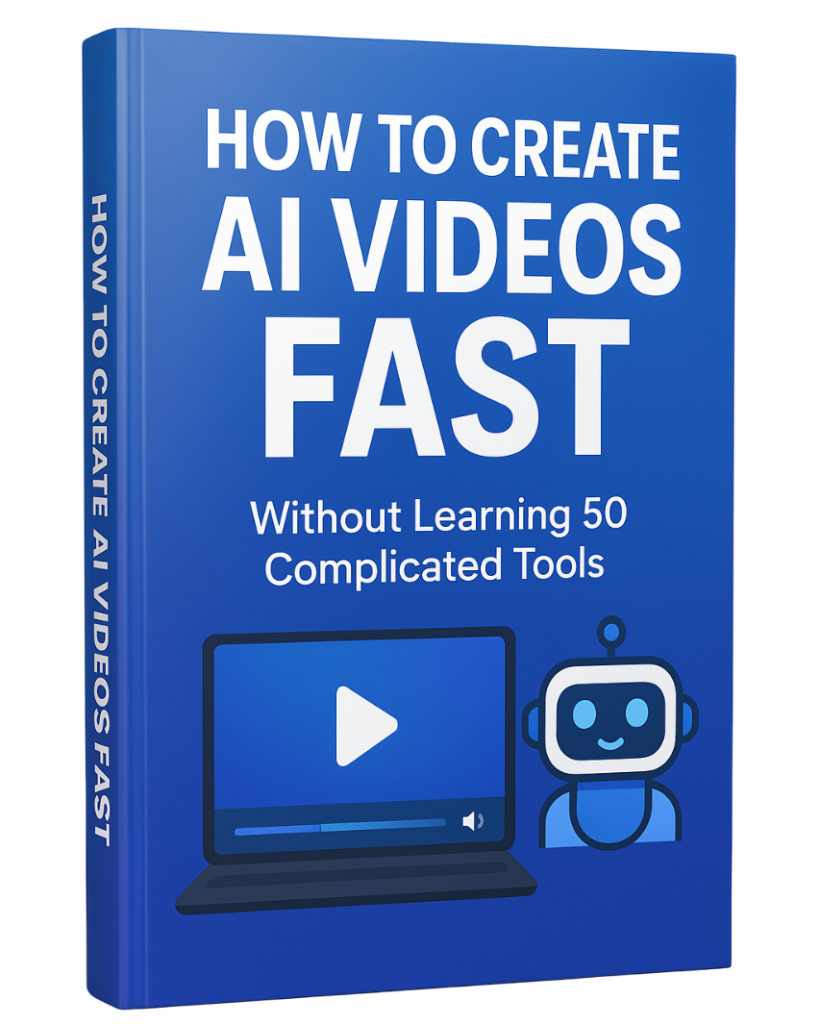
Learn How to Create AI Video Fast an Easy,
If you want a step-by-step guide to create AI videos fast — without learning 50 complicated tools — download the free PDF below and simplify your entire workflow.
Download the free guide:
How to Create AI Videos FAST Without Learning 50 Complicated Tools