
How to Create Short-Form AI Videos for TikTok, Reels, and Shorts
Short-form video is no longer just a trend. In 2026, it is one of the most powerful digital distribution channels available for creators, brands, and online businesses. Platforms like TikTok, Instagram Reels, and YouTube Shorts now dominate attention, discovery, and monetization. At the same time, artificial intelligence has radically lowered the barrier to entry, allowing anyone to create high-quality short videos without filming, editing expertise, or appearing on camera.
AI-powered video creation is transforming how short-form content is produced, scaled, and monetized. What once required a team, a camera setup, and hours of editing can now be done with text prompts, templates, and automation workflows. This article explores how short-form AI videos are created today, why they perform so well, and how creators are using them strategically across platforms.
Why Short-Form Video Is the Perfect Match for AI
Short-form content thrives on speed, volume, and consistency. Algorithms favor frequent posting, rapid experimentation, and fast audience feedback. AI excels in exactly these conditions.
AI video tools can generate scripts, visuals, voiceovers, captions, and edits in minutes. This allows creators to test ideas quickly, iterate on what works, and publish content at a pace that would be impossible manually. The short length of TikTok, Reels, and Shorts also hides many imperfections that might be noticeable in long-form videos, making AI-generated content feel natural and platform-native.
Another reason AI fits short-form so well is attention economics. Short videos need to hook viewers instantly, deliver a clear message, and end before attention drops. AI models trained on high-performing content patterns can optimize pacing, framing, and storytelling for these exact constraints.
Understanding the Core Structure of Viral Short-Form AI Videos
Regardless of platform, high-performing short-form videos tend to follow a similar structure. AI tools are increasingly designed around this formula.
The first two seconds are critical. This is where the hook lives. AI-generated hooks often use curiosity gaps, bold statements, questions, or pattern interruptions. Examples include surprising facts, strong claims, or visually striking openings.
The middle section delivers the value. This might be a tip, a story, a transformation, or a simple explanation. AI excels at condensing information into digestible soundbites that fit within 15 to 45 seconds.
The final moment reinforces retention or prompts action. This can be a looped ending, a cliffhanger, or a subtle call to engage. AI tools can automatically structure endings to encourage rewatches, comments, or profile clicks.
Choosing the Right AI Video Creation Approach
AI Videos for TikTok: There are multiple ways AI is used to create short-form videos, and the approach depends on the goal of the content.
Some creators use text-to-video systems that turn written prompts into fully animated or realistic video clips. Others rely on AI-assisted editing tools that assemble stock footage, motion graphics, and captions into short videos. Another common method is avatar-based video, where AI presenters deliver scripts in a human-like way without requiring a real person on camera.
Voice-driven videos are also popular. AI-generated voiceovers paired with visuals, B-roll, or animated backgrounds allow creators to publish content without showing their face. This approach works particularly well for educational, motivational, news-style, and niche explainer content.
AI Videos for TikTok: Platform-Specific Optimization with AI
While TikTok, Reels, and Shorts share similarities, each platform has unique nuances that AI can help optimize.
TikTok prioritizes fast hooks, native-feeling content, and trend alignment. AI tools trained on TikTok data can suggest hook styles, pacing, and caption formats that align with current trends. Many creators use AI to remix trending topics into niche-specific content at scale.
Instagram Reels tends to reward aesthetic consistency and brand identity. AI helps maintain visual cohesion through templates, color grading, and caption styling. This makes it easier for creators and businesses to build recognizable visual brands without manual design work.
YouTube Shorts focuses heavily on retention and rewatchability. AI-driven editing tools can optimize cuts, timing, and visual emphasis to keep viewers engaged until the end. Shorts also integrate well with long-form YouTube strategies, which AI can help coordinate through topic clustering and content repurposing.
Creating Short-Form AI Videos for TikTok Without Showing Your Face
Faceless content has become one of the most scalable models in short-form video. AI makes this approach not only possible but highly effective.
Faceless AI videos often use a combination of text overlays, AI voiceovers, stock or generated visuals, and automated editing. This format works well for niches like facts, storytelling, finance, productivity, history, quotes, tech updates, and tutorials.
By removing the need for on-camera presence, creators can focus on volume, experimentation, and system-building. AI-generated scripts and visuals allow for rapid content creation while maintaining a professional look.
This model is particularly attractive for people who want to build multiple channels, monetize anonymously, or treat content creation as a business rather than a personal brand.
AI Videos for TikTok: Scaling Short-Form Content with AI Systems
One of the biggest advantages of AI video creation is scalability. Instead of creating one video at a time, creators can build repeatable systems.
AI can batch-generate scripts for dozens of videos, adapt them for different platforms, and produce variations for testing. This allows creators to identify winning formats quickly and double down on what performs best.
Many successful AI-driven channels rely on content libraries rather than individual videos. AI tools can repackage existing ideas into new formats, lengths, and styles, extending the lifespan of each concept.
This system-based approach shifts the mindset from “making videos” to “building assets.” Each short video becomes a data point that informs future content decisions.
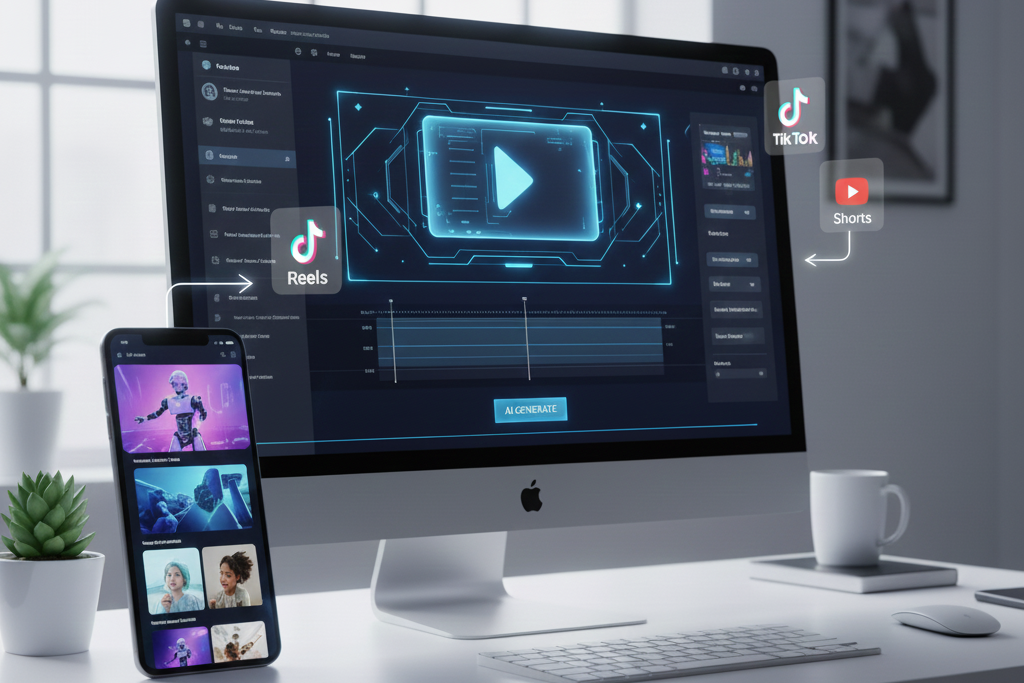
AI Videos for TikTok: Monetization Opportunities for AI Short-Form Videos
Short-form AI videos can be monetized in several ways, even without direct platform payouts.
Some creators use short videos as traffic drivers to affiliate offers, digital products, or lead magnets. Others build theme pages that attract sponsorships once they reach consistent engagement.
Another growing model is offering AI video creation as a service. Businesses increasingly want short-form content but lack the time or expertise to produce it. AI enables freelancers and agencies to deliver high volumes of content efficiently.
There is also long-term asset value. Channels built around evergreen niches can generate ongoing views and revenue long after the videos are published, especially when combined with automation.
Common Mistakes to Avoid When Using AI for Short Videos
While AI is powerful, it is not magic. One common mistake is over-automation without strategy. Flooding platforms with low-quality or repetitive content can harm reach and credibility.
Another issue is ignoring platform culture. AI-generated videos still need to feel native. Content that looks overly polished or disconnected from platform trends may underperform.
Creators should also avoid relying on AI without human oversight. Reviewing scripts, pacing, and messaging ensures the content aligns with audience expectations and brand goals.
The most successful creators treat AI as a creative partner rather than a replacement for judgment and strategy.
AI Videos for TikTok: The Future of Short-Form AI Video Creation
As AI models continue to improve, short-form video creation will become even faster and more personalized. We are already seeing tools that adapt content based on audience behavior, automate A/B testing, and generate performance-based variations.
In the coming years, the competitive advantage will not come from access to AI tools, but from how effectively they are used. Creators who understand storytelling, audience psychology, and system-building will stand out.
Short-form AI videos are not just content. They are distribution engines, marketing assets, and scalable business tools. Those who learn to use them strategically will be well-positioned in the evolving digital economy.
AIVideoCreation #ShortFormVideo #TikTokAutomation #YouTubeShorts #InstagramReels #FacelessContent #AIVideoMaker
AI Video Creation System
Learn How to Create AI Video Fast an Easy,
If you want a step-by-step guide to create AI videos fast — without learning 50 complicated tools — download the free PDF below and simplify your entire workflow.
Download the free guide:
How to Create AI Videos FAST Without Learning 50 Complicated Tools