
AI That Makes Videos: How Modern Generative Tools Are Replacing Traditional Editing
The way videos are created is undergoing a fundamental shift. For decades, video production relied on complex editing software, expensive hardware, and highly specialized skills. Today, AI that makes videos is rewriting those rules. Generative video tools are no longer experimental toys or niche solutions. They are becoming a core part of how marketers, businesses, and independent creators produce content at scale.
This transformation is not just about speed or convenience. It represents a deeper change in how visual content is conceived, produced, and distributed. Traditional editing is increasingly being replaced by AI-driven systems that automate scripting, visuals, voiceovers, and even publishing workflows. Understanding how this shift works is essential for anyone who wants to remain competitive in digital content creation.
What Does “AI That Makes Videos” Really Mean?
AI that makes videos refers to generative systems capable of producing complete or semi-complete video content with minimal human input. Instead of manually cutting clips, adjusting timelines, or layering effects, users provide prompts, scripts, or basic instructions. The AI then generates scenes, transitions, voiceovers, subtitles, and visual elements automatically.
These systems rely on a combination of machine learning models, including natural language processing, computer vision, and generative adversarial networks or diffusion models. Together, they allow AI to interpret text, understand visual patterns, and synthesize new video content that looks increasingly natural and professional.
Unlike traditional editing software, which requires users to make hundreds of small decisions manually, AI video creation tools focus on outcomes rather than processes. The user defines the message or goal, and the system handles execution.

How Generative Video Tools Differ From Traditional Editing
Traditional video editing is fundamentally manual. Editors work with raw footage, arrange clips on a timeline, adjust transitions, sync audio, color grade scenes, and export the final product. This approach offers high creative control but demands time, expertise, and repetition.
Generative AI tools operate on a different logic. Instead of manipulating footage frame by frame, they generate video elements from data. Stock footage, animations, avatars, backgrounds, and even voices are synthesized or selected automatically based on context.
AI That Makes Videos The key differences include:
Traditional editing requires technical proficiency, while AI video tools prioritize accessibility.
Manual workflows scale poorly, while AI-driven workflows scale almost instantly.
Editing software depends on raw footage, while generative tools can create visuals from text alone.
Human editors control every detail, while AI systems optimize for speed and consistency.
This does not mean traditional editing disappears overnight. High-end film, television, and bespoke brand storytelling will continue to rely on human creativity. However, for marketing, education, social media, and internal business communication, AI is rapidly becoming the preferred option.
Why Businesses Are Replacing Traditional Editing With AI That Makes Videos
The adoption of AI video creation is not driven by novelty. It is driven by economics and efficiency.
Businesses today are under constant pressure to produce more content for more platforms. Social media, websites, ads, email campaigns, and internal training all require video. Traditional production models simply cannot keep up without massive budgets.
AI tools offer several strategic advantages:
Speed is the most obvious benefit. Videos that once took days can now be created in minutes.
Cost reduction is significant, as there is no need for studios, crews, or advanced editing teams.
Consistency across branding and messaging becomes easier with automated templates.
Localization and translation can be handled automatically, opening global markets instantly.
For small businesses and solo creators, AI levels the playing field. For large organizations, it enables scale without sacrificing control.
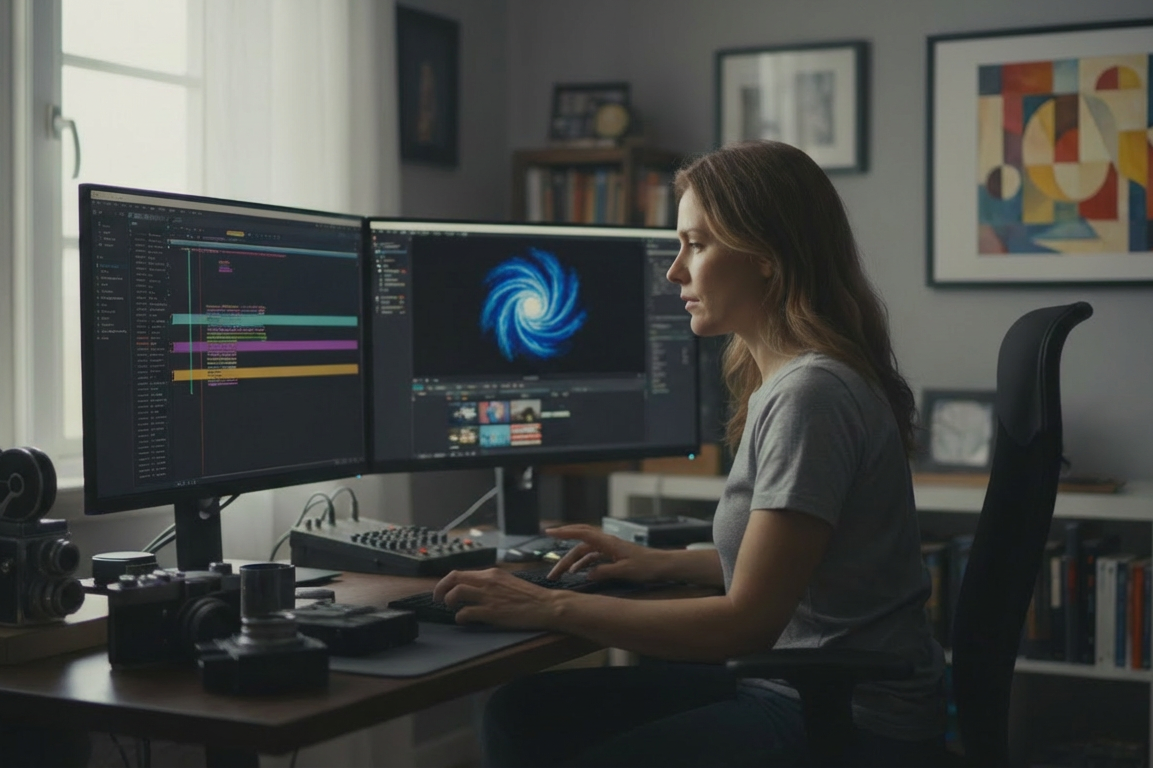
The Core Technologies Powering AI Video Creation
Modern generative video tools rely on several underlying technologies working together.
Natural language processing allows AI to understand scripts, prompts, and instructions written in plain language. This enables text-to-video functionality where a simple paragraph becomes a structured visual narrative.
Computer vision enables AI to analyze and generate images, animations, and scenes that align with the intended message. This includes selecting appropriate stock visuals or generating synthetic ones.
Text-to-speech and voice cloning technologies produce natural-sounding narration without the need for human voice actors. Many tools now support multiple languages and tones.
Automation engines handle workflows such as scene sequencing, subtitle generation, aspect ratio adaptation, and publishing optimization.
The combination of these systems creates a seamless experience where video creation feels more like directing than editing.
AI That Makes Videos: Use Cases Where AI Video Tools Are Replacing Editors
AI-generated video becomes especially powerful in environments where volume, speed, and repetition matter more than cinematic perfection. In these contexts, traditional editing workflows often slow teams down, increase costs, and create unnecessary bottlenecks.
Here’s where AI video tools are actively replacing — or at least dramatically reducing the need for — manual editing:
Marketing & Performance Advertising
Modern marketing runs on iteration. One creative is never enough.
Marketing teams now use AI to generate:
- Product demos
- Explainer videos
- Paid ad variations
- Social media clips
- Localization versions for different regions
Instead of producing one polished ad and hoping it converts, teams can create dozens of variations with different hooks, voiceovers, calls to action, and formats. Testing becomes faster. Optimization cycles shrink. Creative fatigue decreases.
In performance marketing, speed beats perfection. AI turns creative production from a bottleneck into a testing engine.
Ecommerce & Product Content at Scale
Online stores frequently launch new products, bundles, or variations. Filming each item manually can be expensive and time-consuming.
AI tools allow ecommerce brands to:
- Convert product descriptions into short demo videos
- Generate UGC-style ads without hiring talent
- Repurpose existing product photos into dynamic clips
- Adapt messaging across platforms instantly
Instead of coordinating shoots and editors, teams can produce scalable visual assets directly from their catalog.
Education & Online Courses
Educators and course creators benefit enormously from AI-powered video.
Instead of recording long lessons with cameras, lighting, and post-production editing, instructors can:
- Turn scripts into structured video modules
- Update content instantly without re-recording
- Translate lessons into multiple languages
- Generate consistent branded presentations
When a statistic changes or a concept needs refinement, the video can be regenerated in minutes — not reshot in a studio.
For fast-evolving industries, that flexibility is invaluable.
Affiliate & Faceless Content Creation
Affiliate marketers and faceless content creators thrive on consistency and volume.
AI enables:
- Script-to-video automation
- Voiceover generation
- Background visuals without filming
- Rapid repurposing for Shorts, Reels, and TikTok
Creators no longer need to appear on camera or manage complex editing timelines. They can focus on research, scripting, and distribution strategy while AI handles the visual assembly.
This dramatically lowers the barrier to entry for content-based monetization.
Internal Business Communication
Not every video needs cinematic flair. Sometimes clarity and consistency matter more.
Companies use AI-generated videos for:
- Employee onboarding
- Policy updates
- Compliance training
- Internal announcements
- HR communications
AI ensures tone consistency, brand alignment, and multilingual accessibility without requiring a full media department. Updates can be deployed quickly across teams and regions.
For internal workflows, traditional editing is often unnecessary overhead.
Why AI Replaces Editors in These Scenarios
In all these cases, the goal isn’t artistic storytelling — it’s efficient communication at scale.
Traditional editing still dominates:
- Narrative filmmaking
- Brand commercials
- High-end promotional content
- Complex visual storytelling
But for repetitive, structured, information-driven video formats, AI reduces friction dramatically.
Editors aren’t disappearing — their role is evolving. High-level creative direction, storytelling strategy, and brand refinement still require human judgment. However, production-heavy, repetitive assembly tasks are increasingly automated.
In volume-driven environments, AI doesn’t just assist editors.
It replaces the need for them entirely.
And in fast-moving markets, that efficiency becomes a competitive advantage.
AI That Makes Videos: Limitations and Trade-Offs of AI Video Creation
Despite its advantages, AI video creation is not without limitations. Understanding these trade-offs is crucial to using the technology effectively.
Creative originality can be constrained by templates and datasets. While AI tools are improving rapidly, they may struggle to produce highly unique or emotionally nuanced storytelling without human guidance.
Customization beyond predefined options can be limited. Advanced users may feel restricted compared to professional editing software.
Quality varies significantly between platforms. Some tools produce highly polished results, while others still feel generic or artificial.
There is also a learning curve, not in technical editing, but in prompt writing and creative direction. Users must learn how to communicate intent clearly to get the best results.
The most successful creators treat AI as a collaborator rather than a replacement for creative thinking.
How Creators Can Transition From Editing to Directing
As AI takes over execution, the role of the creator shifts. Instead of focusing on timelines and transitions, creators focus on strategy, messaging, and audience psychology.
This transition involves developing skills in:
- Scriptwriting optimized for AI narration
- Visual storytelling at a conceptual level
- Understanding platform-specific formats and retention triggers
- Analyzing performance data and iterating quickly
Creators who resist this shift risk being left behind. Those who embrace it gain leverage, producing more content with less friction.
AI That Makes Videos: Top 10 AI Tools to Create Amazing Videos Fast
Synthesia
Synthesia is one of the most powerful AI video platforms available today. It lets you create professional videos using AI avatars and realistic voiceovers in multiple languages. No camera, no studio, no stress. Perfect for tutorials, marketing, and training content.
Pictory
Pictory transforms long articles or scripts into engaging short videos automatically. Just paste your text and the AI generates visuals, captions, and music. Ideal for bloggers and marketers who want to repurpose content quickly.
InVideo AI
InVideo AI is designed for creators who want speed and quality. You provide a prompt, and it generates a full video with scenes, voiceover, and transitions. Great for social media content and ads.
HeyGen
HeyGen specializes in AI avatars and talking-head videos. You can clone your own voice or use pre-built avatars to create professional presentations in minutes. It feels like real video production without the effort.
Runway ML
Runway is more advanced and creative-focused. It allows AI video editing, background removal, motion tracking, and even text-to-video generation. Perfect for filmmakers and serious creators.
Fliki
Fliki converts text into videos with realistic AI voices. It’s excellent for creating YouTube automation channels, explainer videos, or educational content without recording anything yourself.
Descript
Descript is more than a video editor. It uses AI to edit videos by editing text. You can remove mistakes, add voiceovers, and even clone your voice. Super powerful for podcasts and video creators.
VEED.IO
VEED includes AI tools for subtitles, translations, and automatic editing. It’s a simple but effective platform for creating quick professional-looking videos with minimal effort.
Colossyan
Colossyan is another strong AI avatar platform focused on corporate and educational videos. Great for businesses that need training or onboarding material at scale.
Lumen5
Lumen5 turns blog posts into social videos automatically. It analyzes your content and creates attractive visual stories perfect for Facebook, Instagram, and LinkedIn.
The era of AI That Makes Videos is here, and these tools prove it. You no longer need expensive equipment or technical skills to produce professional content. The real advantage comes from choosing the right tool for your specific goal.
The Future of Video Creation in an AI-Driven World
AI that makes videos is not a temporary trend. It is a structural change in how visual media is produced. As models improve, we can expect more realistic avatars, better motion consistency, and deeper creative control.
The future likely belongs to hybrid workflows where AI handles repetitive tasks and humans focus on vision and originality. Traditional editing will remain relevant in high-end creative work, but AI will dominate everyday content creation.
For businesses and creators alike, the question is no longer whether AI video tools will replace traditional editing in many contexts. The real question is how quickly they adapt to this new reality.
Those who start learning and experimenting now will build a lasting advantage. Those who wait may find that the industry has already moved on.
How to Make Video with AI.
Learn How to Create AI Video Fast an Easy,
If you want a step-by-step guide to create AI videos fast — without learning 50 complicated tools — download the free PDF below and simplify your entire workflow.
Download the free guide:
How to Create AI Videos FAST Without Learning 50 Complicated Tools